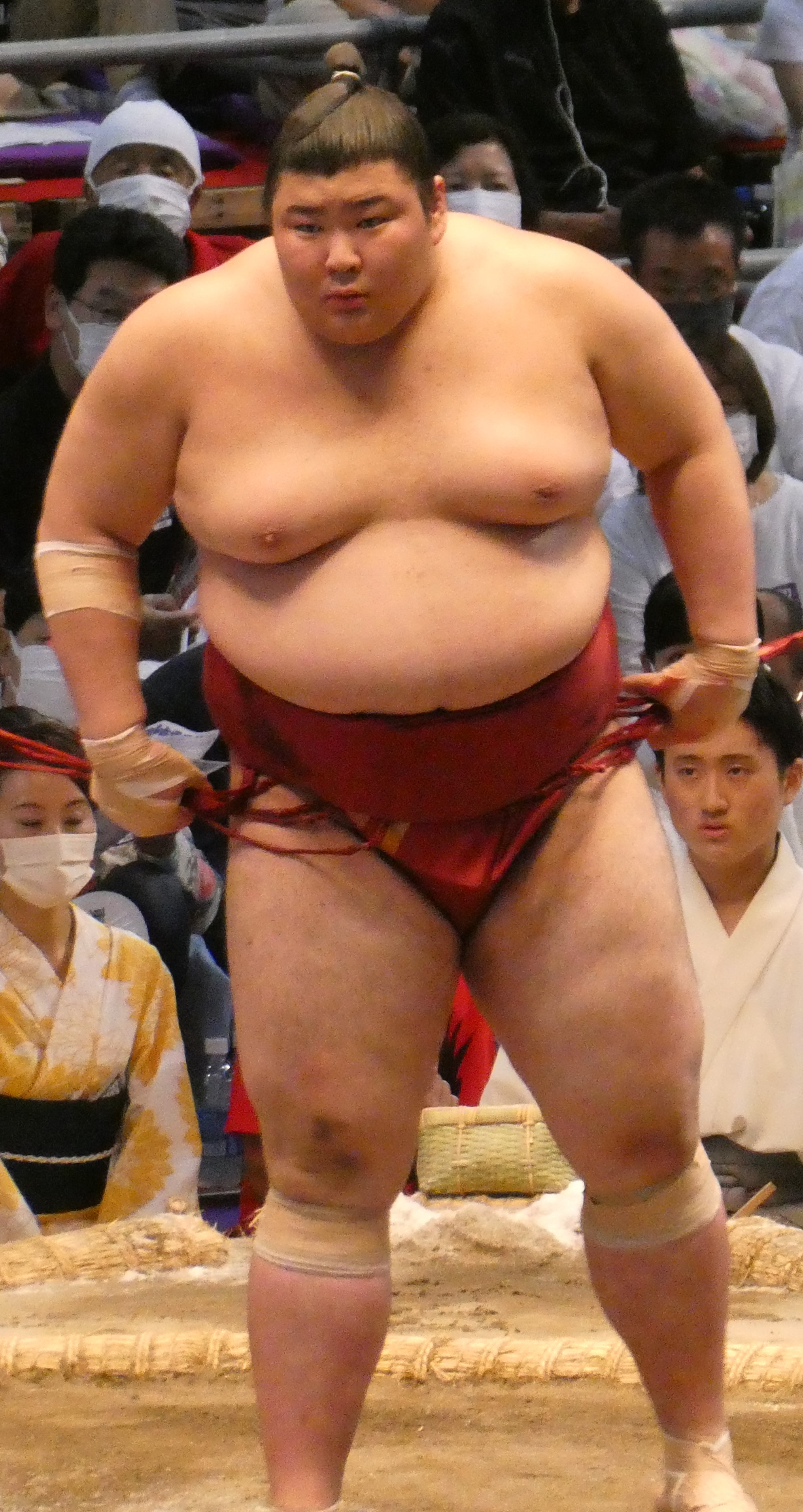
📊 Atamifuji at a Glance
| Category | Details |
|---|---|
| Real name | Takei Sakutaro (武井 朔太郎) |
| Ring name (shikona) | Atamifuji Sakutaro (熱海富士 朔太郎) |
| Born | September 3, 2002 |
| Birthplace | Born in Chiba Prefecture; raised in Atami, Shizuoka Prefecture |
| Stable | Isegahama-beya |
| Height | Approx. 187 cm |
| Weight | Approx. 197 kg |
| Debut | November 2020 |
| Highest rank | Sekiwake 1 East (May 2026) |
| Style | Yotsu-sumo (grappling/belt-focused) |
| Ring name origin | "Atami" (熱海) from hometown + "Fuji" (富士) from stablemaster Asahifuji's name |
🏙️ Early Life and Path to Sumo
Atamifuji was born Takei Sakutaro in Chiba Prefecture on September 3, 2002, but moved to the seaside resort city of Atami in Shizuoka Prefecture during elementary school. It is Atami — the hot spring town on the Izu Peninsula — that he considers his hometown, and which provides the first part of his ring name.
He attended Hiryu High School (飛龍高校), a school with a strong sumo program located in Numazu, Shizuoka. During his time there, Atamifuji developed rapidly as a physical athlete, reportedly increasing his weight from approximately 130 kg at enrollment to around 170 kg by graduation. While he did not win any national high school championships, his raw physical potential and rapid development attracted attention from professional sumo stables.
Why Isegahama Stable?
Atamifuji joined Isegahama stable partly because two graduates of Hiryu High School were already training there, including Midorifuji. The familiarity of the connection, combined with the stable's excellent training facilities and its lineage under former yokozuna Asahifuji, made it a natural choice. He was given the ring name "Atamifuji" — combining "Atami" from his hometown with "Fuji" from his stablemaster's ring name Asahifuji.
Entering sumo straight out of high school at age 18, Atamifuji began his professional career in the November 2020 tournament at the very bottom of the rankings.
📈 Career Timeline: From Debut to Komusubi
Atamifuji's rise through the sumo ranks has been one of the fastest in recent memory. Here is a timeline of his key career milestones, based on publicly available records:
| Period | Milestone | Details |
|---|---|---|
| Nov 2020 | Professional debut | Entered at the bottom of the banzuke (jonokuchi division) |
| Early 2021 | Jonokuchi & jonidan championships | Won championships in the two lowest divisions during his rapid climb |
| 2021–2022 | Record-fast promotion to juryo | One of the fastest promotions to the second division in modern sumo history (since 1958), without recording a single losing tournament |
| Nov 2022 | Makuuchi debut | Promoted to the top division after just 12 tournaments — tied for eighth-fastest in history since 1958 |
| Jan 2023 | Demotion to juryo | Struggled in his first full makuuchi tournament and was demoted back to the second division |
| May–Jul 2023 | Juryo dominance & return | Posted a 13-2 record (May) and won the juryo championship (July) after a playoff victory over Daiamami |
| Sep 2023 | First makuuchi runner-up | Finished 11-4, losing to Takakeisho in a championship playoff. Won his first Kanto-sho (Fighting Spirit prize) |
| Nov 2023 | Second consecutive runner-up contention | Challenged for the championship again, finishing 11-4. Battled Kirishima for the lead through Day 12 before losing on Days 14–15. Second Kanto-sho |
| 2024–2025 | Continued makuuchi competition | Established himself as a consistent mid-to-upper maegashira wrestler, gradually climbing the ranks |
| Jan 2026 | Career-best 12-3, two kinboshi | Defeated both yokozuna (Hoshoryu and Onosato) on consecutive days. Lost to Aonishiki in a championship playoff for the yusho |
| Mar 2026 | Promoted to komusubi | Reached Komusubi 1 West — the first wrestler from Shizuoka Prefecture in the sanyaku ranks since Tenryu in 1930 |
🥋 Fighting Style Analysis
Atamifuji is classified as a yotsu-sumo wrestler — meaning he primarily relies on grappling and belt work rather than the pushing and thrusting (oshi-zumo) techniques that dominate modern sumo.
Core Technique: Belt-Focused Grappling
Atamifuji's fundamental strategy is to close the distance with his opponent, establish a grip on the mawashi (belt), and use his considerable mass (approximately 197 kg) to control the bout at close range. His most commonly recorded winning technique is yorikiri — the force-out, where the attacker drives an opponent backward and out of the ring while maintaining a belt grip. This is the most common winning technique in sumo overall, but Atamifuji executes it with particular effectiveness due to his size and strength.
Physical Advantages
At 187 cm and approximately 197 kg, Atamifuji carries substantial weight on a frame that, while not exceptionally tall by top-division standards, is powerfully built. His weight gives him a natural advantage in belt battles, where mass can be leveraged directly against an opponent. His physicality was evident from his high school days, when he put on approximately 40 kg during his three years at Hiryu High School.
Developing Areas
Like many young wrestlers who rise quickly on physical talent, Atamifuji has areas of his game that are still maturing. His tachi-ai (initial charge) has been noted as an area for potential improvement — at the highest level, the opening moment of a bout often determines the outcome, and the elite sanyaku wrestlers he now faces routinely tend to have more refined opening techniques. As he gains experience at the komusubi level and above, this aspect of his sumo will likely be tested most severely.
For more context on sumo techniques and how wrestlers like Atamifuji use them, see our complete guide to sumo techniques.
🏠 Isegahama Stable and Training Environment
Isegahama-beya is one of the most storied stables in professional sumo, led by the former yokozuna Asahifuji (the 63rd yokozuna, who competed under that ring name in the late 1980s and early 1990s). The stable has produced multiple top-division wrestlers and is considered one of the premier training environments in sumo.
Notable Stablemates
Atamifuji trains alongside (or has trained alongside) several significant wrestlers:
- Terunofuji — The 73rd yokozuna, who made a historic comeback from the lower divisions after injuries nearly ended his career. Although Terunofuji has been largely absent from competition due to ongoing knee issues, his presence in the stable has provided Atamifuji with an extraordinary model of perseverance and technical excellence.
- Midorifuji — A fellow Hiryu High School graduate and established makuuchi wrestler, whose connection helped draw Atamifuji to the stable.
- Atami — Shares a hometown connection with Atamifuji, strengthening the Shizuoka presence in the stable.
The Isegahama Training Philosophy
Isegahama stable is known for a rigorous training regimen that emphasizes fundamentals. The stable's connection to yokozuna-level sumo — through both Asahifuji's own career and Terunofuji's presence — means that Atamifuji has been exposed to the highest standards of preparation from early in his career. This environment likely contributed to his remarkably fast rise through the lower divisions.
To understand how the stable system works in sumo, see our guide to how sumo works and the sumo ranking system.
🌟 The January 2026 Breakthrough
The January 2026 Hatsu Basho in Tokyo marked the tournament where Atamifuji announced himself as a genuine title contender. His 12-3 record was a career best, but it was the quality of his victories that turned heads throughout the sumo world.
Two Kinboshi on Consecutive Days
The defining moment of Atamifuji's January 2026 was defeating both active yokozuna — Hoshoryu and Onosato — on consecutive days. In sumo, a lower-ranked wrestler's victory over a yokozuna is called a kinboshi ("gold star"), and it is one of the most celebrated achievements a rank-and-file wrestler can earn. Earning two in a single tournament, against both yokozuna, is a rare and emphatic statement of competitive arrival.
Championship Playoff
Atamifuji finished the tournament tied at 12-3, earning a spot in a championship playoff against Aonishiki. While he ultimately lost the playoff and did not claim the tournament title (yusho), finishing as runner-up with that record — and those kinboshi — was more than enough to secure his promotion to komusubi for the March 2026 tournament.
Awards
For his January 2026 performance, Atamifuji received the Kanto-sho (Fighting Spirit prize), adding to the Kanto-sho awards he had previously earned in September and November 2023. The consistency of these prizes underscores his reputation as one of the most aggressive and determined competitors in the division.
🔮 Future Outlook: How High Can Atamifuji Rise?
At 23 years old, Atamifuji's career trajectory points upward. Several factors work in his favor:
Youth
Sumo wrestlers typically peak between their mid-20s and early 30s. Atamifuji has years of potential physical development and technical refinement ahead of him. Many of the greatest wrestlers in sumo history achieved their highest ranks in their late 20s.
Physical Potential
His body has consistently developed throughout his career — from 130 kg in high school to approximately 197 kg now. He has the frame and weight to compete with anyone in the top division. As he matures and refines his technique, his effectiveness is likely to increase.
The Road to Ozeki
The next major rank above komusubi is sekiwake, and above that is ozeki — sumo's second-highest rank. Promotion to ozeki typically requires a combined record of approximately 33 wins over three consecutive tournaments while ranked in the sanyaku (komusubi or sekiwake). This is a high bar, but Atamifuji's January 2026 performance (12-3) suggests it is within his capabilities if he can sustain that level of performance.
Historical Significance for Shizuoka
Atamifuji's promotion to komusubi made him the first wrestler from Shizuoka Prefecture to reach the sanyaku ranks since Tenryu was promoted to sekiwake in 1930 — a gap of nearly a century. If he continues to climb, he would further cement a significant place in both Shizuoka and sumo history.
📺 How to Watch Atamifuji's Matches
As a komusubi-ranked wrestler, Atamifuji competes in the top-division bouts that take place in the late afternoon of each tournament day, typically between 4:00 PM and 6:00 PM Japan time. Here's how to follow his career:
Live in Japan
- Attend in person — See our sumo tickets guide for how to buy tournament tickets
- ABEMA TV — Free live streaming of all tournament bouts (Japan only)
- NHK — National broadcast coverage during tournaments
From Outside Japan
🔒 Watch Atamifuji Live from Anywhere
Use a VPN to access ABEMA's free live sumo streams from outside Japan.
Get NordVPNWatch on ABEMA →
For a full setup walkthrough, see our VPN for Sumo guide.
Recommended Reading
Want to deepen your understanding of sumo before watching Atamifuji compete? Consider these resources:
- Browse sumo books on Amazon Japan (English-language titles available)
- Complete guide to watching sumo online
❓ Frequently Asked Questions
What is Atamifuji's current rank in sumo?
As of the March 2026 tournament (Haru Basho), Atamifuji holds the rank of Komusubi 1 West — the fourth-highest rank in professional sumo. This is a career-high ranking. Note that rankings change after every tournament; check the Japan Sumo Association website for the most current banzuke.
Which stable does Atamifuji belong to?
Atamifuji belongs to Isegahama stable (Isegahama-beya), one of the most prominent stables in professional sumo. The stable is led by the former yokozuna Asahifuji. Notable Isegahama wrestlers have included Terunofuji (the 73rd yokozuna) and Midorifuji.
How old is Atamifuji?
Atamifuji was born on September 3, 2002, making him 23 years old as of May 2026 (Natsu Basho). He debuted in professional sumo in November 2020 at just 18 years old. His youth is considered one of his greatest assets, as sumo wrestlers typically peak between their mid-20s and early 30s.
What is Atamifuji's fighting style?
Atamifuji is primarily a yotsu-sumo (grappling-style) wrestler. He prefers to establish a belt grip and use his considerable size and strength to control opponents at close range, rather than relying on pushing and thrusting techniques. His most commonly recorded winning technique is yorikiri (force-out while gripping the belt). For more on sumo techniques, see our sumo techniques guide.
How can I watch Atamifuji's matches?
During tournament periods, Atamifuji's matches can be watched live on ABEMA TV (free, but geo-restricted to Japan). From outside Japan, you can use a VPN set to a Japanese server to access ABEMA. NHK World also provides English-language sumo highlights during tournaments. Tournaments are held six times a year: January, March, May, July, September, and November.